Why Do Kids Get Heel Pain When They Run?
Inside this episode
The video’s narration, chapter by chapter, with stills from the video and every source at the end.
The short version
At this age, that pattern is most often blamed on an irritated heel growth plate, often called Sever's disease. It usually settles, but only an examination can say what it is. Easing off what hurts and a heel raise or heel cup are common first steps, and some signs mean it needs checking soon.
What could it be?
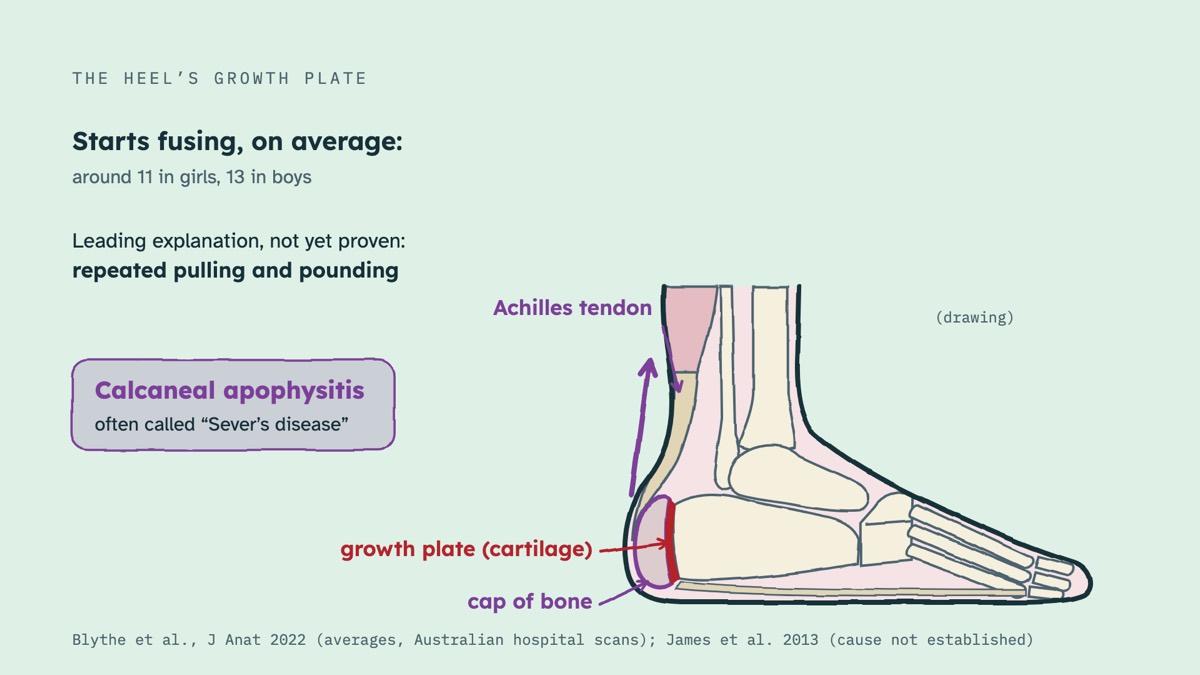
At the back of a child's heel bone is a separate cap of bone, joined on by a growth plate: cartilage that starts turning to bone, on average, around 11 in girls and 13 in boys. The Achilles tendon pulls on that cap. The leading explanation, not yet proven, is that repeated pulling and pounding irritate it. It's called calcaneal apophysitis, or Sever's disease.
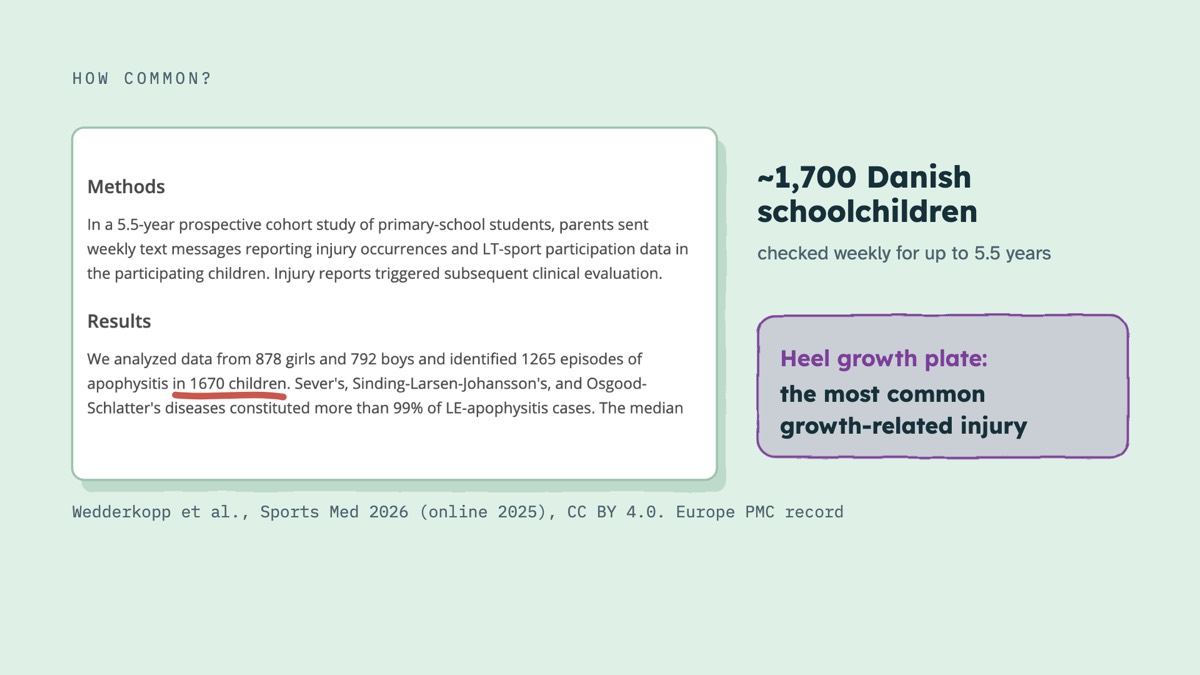
In a Danish study that checked on about 1,700 schoolchildren weekly for years, it was the most common growth-related injury.
Several details fit that picture: the age, the back of the heel, pain with running that eases with rest, no injury, a recent growth spurt. But a pattern isn't a diagnosis. In a small Australian study of 47 children with back-of-heel pain, about 3 in 10 had something else, such as a tendon problem. An examination tells them apart, and doctors differ on routine X-rays.
Can they keep playing?
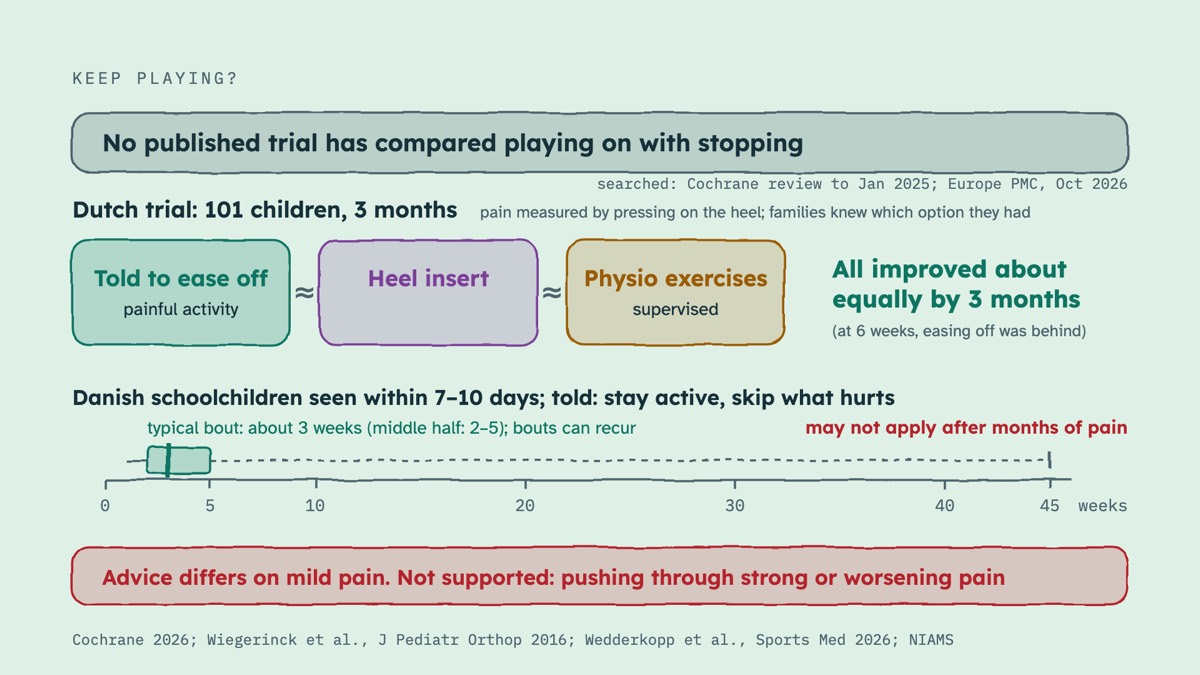
No published trial has compared playing on with stopping. In a Dutch trial of 101 children, those told to ease off painful activity improved about as much over three months as those given a heel insert or physio exercises. Danish children seen within about a week, and told to stay active but skip whatever hurt, typically had a bout of about three weeks; after months of pain, that may not apply. Advice differs on mild pain, but pushing through strong or worsening pain isn't supported.
What helps it ease?
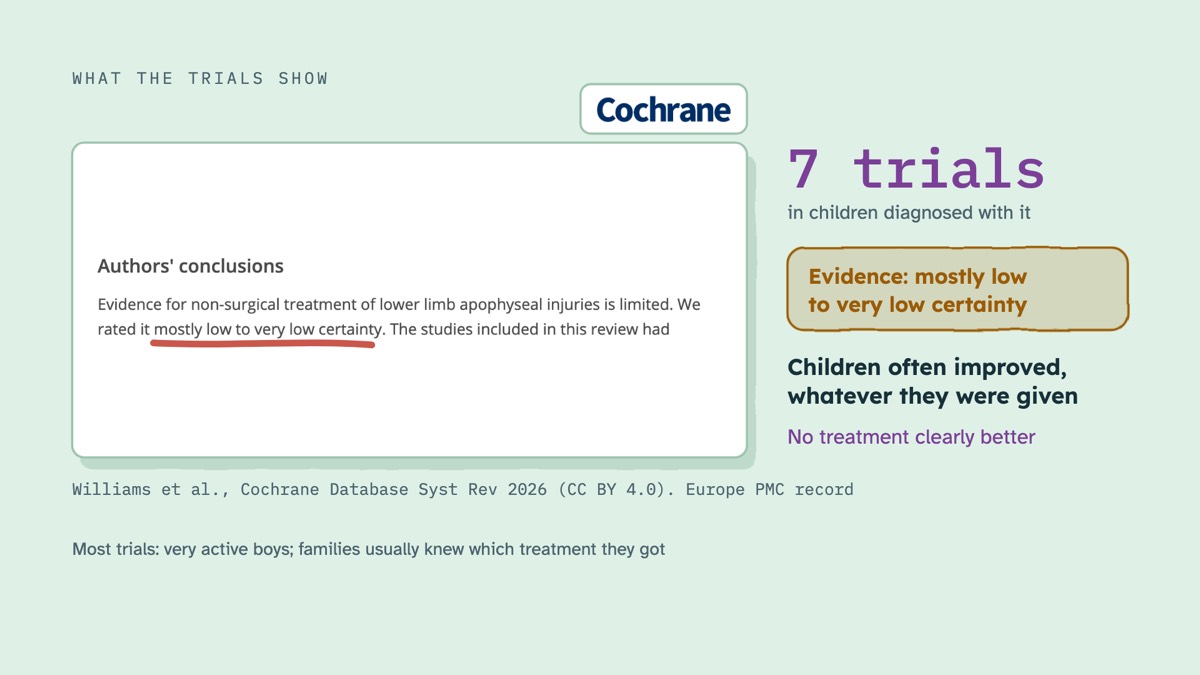
A 2026 Cochrane review found only seven small-to-medium trials in children diagnosed with this heel problem, and rated the evidence mostly low to very low certainty. Children often improved whatever they were given, and it's uncertain whether any treatment beats another.
In the best of those trials, from Australia, a 6-millimetre heel raise did about as well as a ready-made shoe insert, and new athletic shoes added nothing.
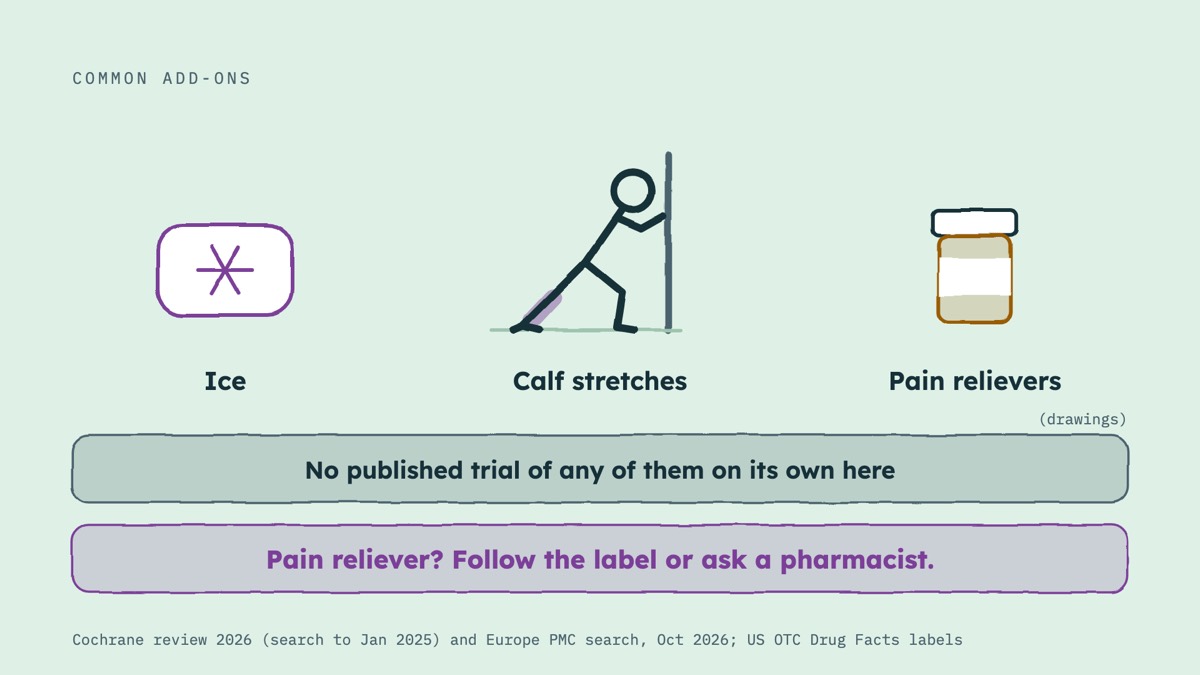
Ice, calf stretches and pain relievers are common, but no published trial has tested them on their own for this. If you use a pain reliever, follow the label or ask a pharmacist.
The hard part is sticking with it. Many young athletes treat sports pain as normal, so agree ahead of time, with the child and coach, what counts as too much, and which drills to swap. Keep it simple: in a small study of a pain-guided program, about a third of children didn't finish, often because of time and travel.
When should it be checked?
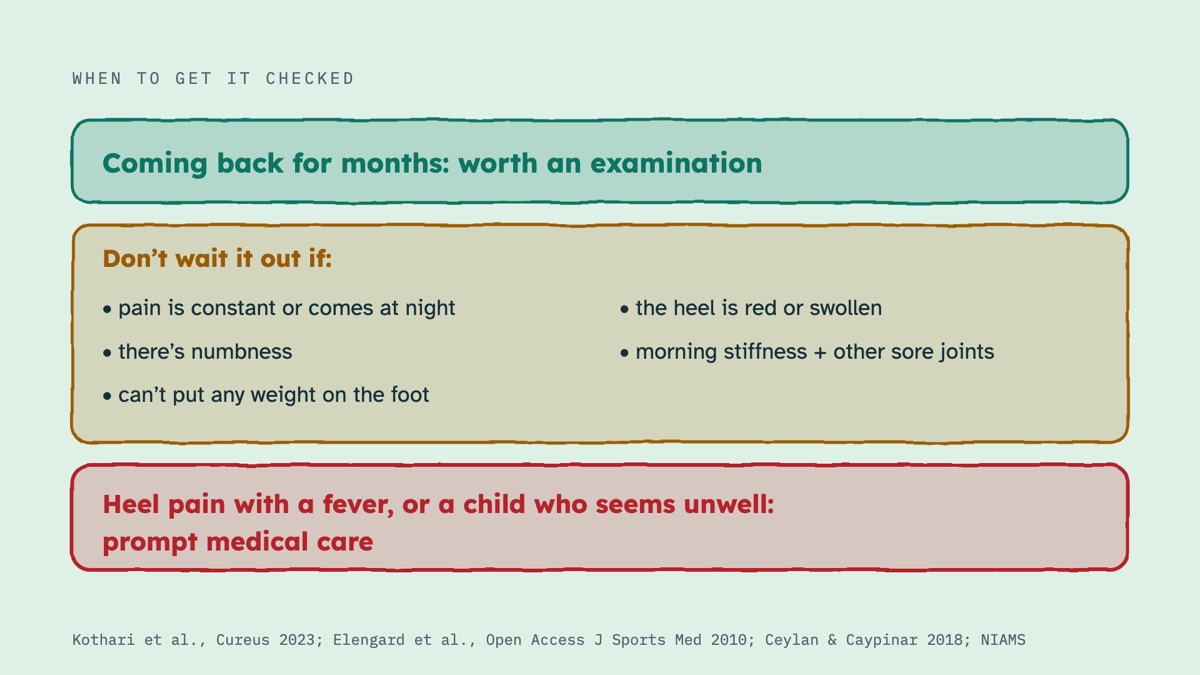
Pain that keeps coming back for months is worth an examination. Don't wait it out if the pain is constant or comes at night, the heel is red or swollen, there's numbness, morning stiffness with other sore joints, or the child can't put any weight on the foot. Heel pain with a fever, or a child who seems unwell, needs prompt medical care.
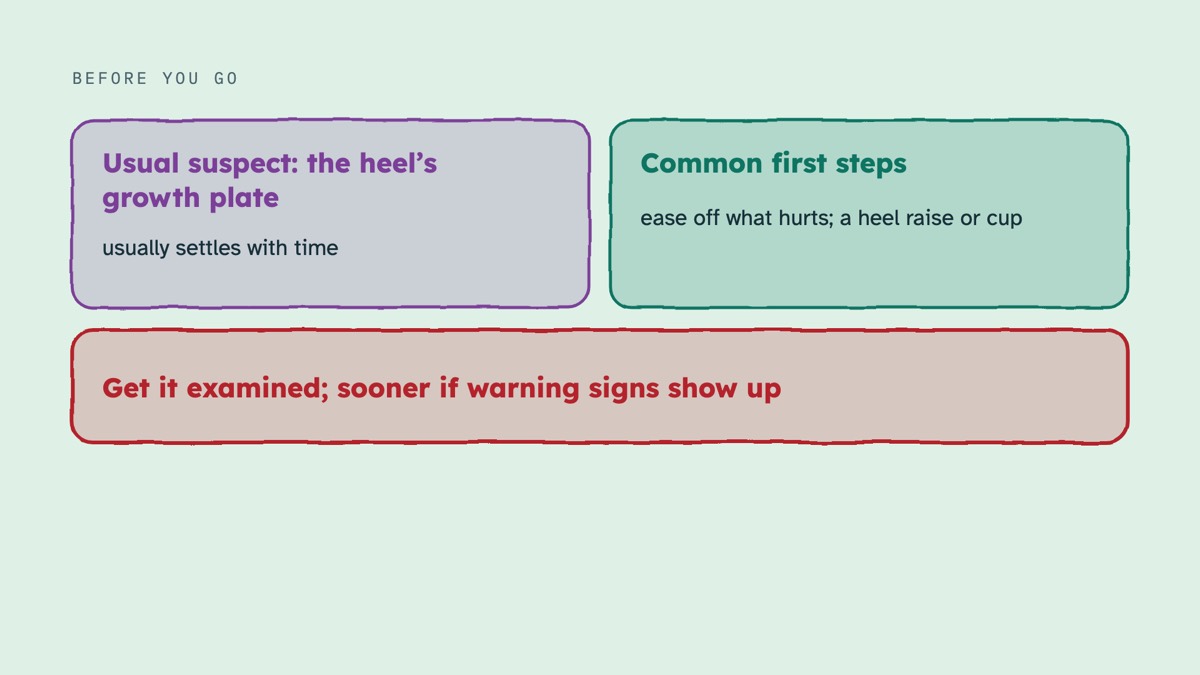
So: at 12, the usual suspect is the heel's growth plate, and it usually settles. Get it examined, sooner if warning signs show up.
Sources
14 sources cited in the video, in the order they come up.
Key sources
- Williams 2026, Cochrane review
- James 2016, heel raise vs orthoses vs footwear (Br J Sports Med)
- Wiegerinck 2016, wait and see vs insert vs physical therapy (J Pediatr Orthop)
- Wedderkopp 2026, Danish school cohort (Sports Med)
- Brooks 2024, clinic pilot (PeerJ)
- Blythe 2022, heel growth-plate fusion ages (J Anat)
- James 2013, systematic review (J Foot Ankle Res)
- Kose 2010 and Rachel 2011, X-rays (two small single-clinic series that disagree) [link 2]
- Kothari 2023, review of children's heel pain (Cureus)
- Elengard 2010, heel pain in young athletes
- Hanlon 2026, pain-guided program feasibility study
- Kox 2019, athletes aged 13–25 with wrist pain
- NIAMS, sports injuries


