
Why Are Stair Falls Worse Than Tripping?
Inside this episode
The video’s narration, chapter by chapter, with stills from the video and every source at the end.
The short version
Welcome to Health Loom. Here's the short version. Fall for fall, a stair fall is probably riskier: you can drop farther, hit a hard edge or hit more than once, and may have less room to catch yourself. That higher risk has been measured in older adults; we found no study in people your age. But in total, most young adults' fall injuries happen off the stairs, probably because that's where most of their falls happen. And not every tailbone injury is a break.
What makes a stair fall different?
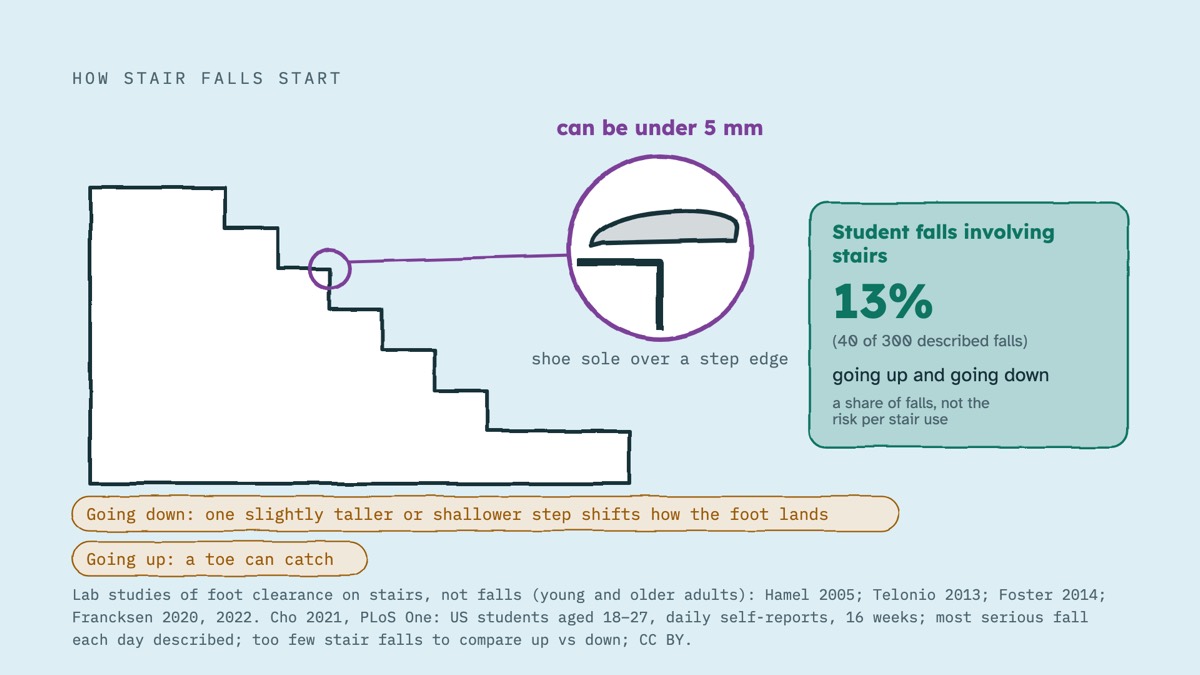
Going down stairs, the gap between your shoe and the step edge can be just millimetres, so one step slightly taller or shallower than the others can change where your foot lands. Going up, a toe can catch. In that student study, about one fall in eight involved stairs, going up as well as going down.
Then there's height. On stairs, the bottom can be one step or a whole flight below, though a body falling down a flight probably hits step after step rather than dropping the whole height at once. And in one German trauma centre's records of adults rushed in after stair or escalator falls, broken bones were more common the more steps they fell, but the extra breaks were mostly in the face and head, not the spine.
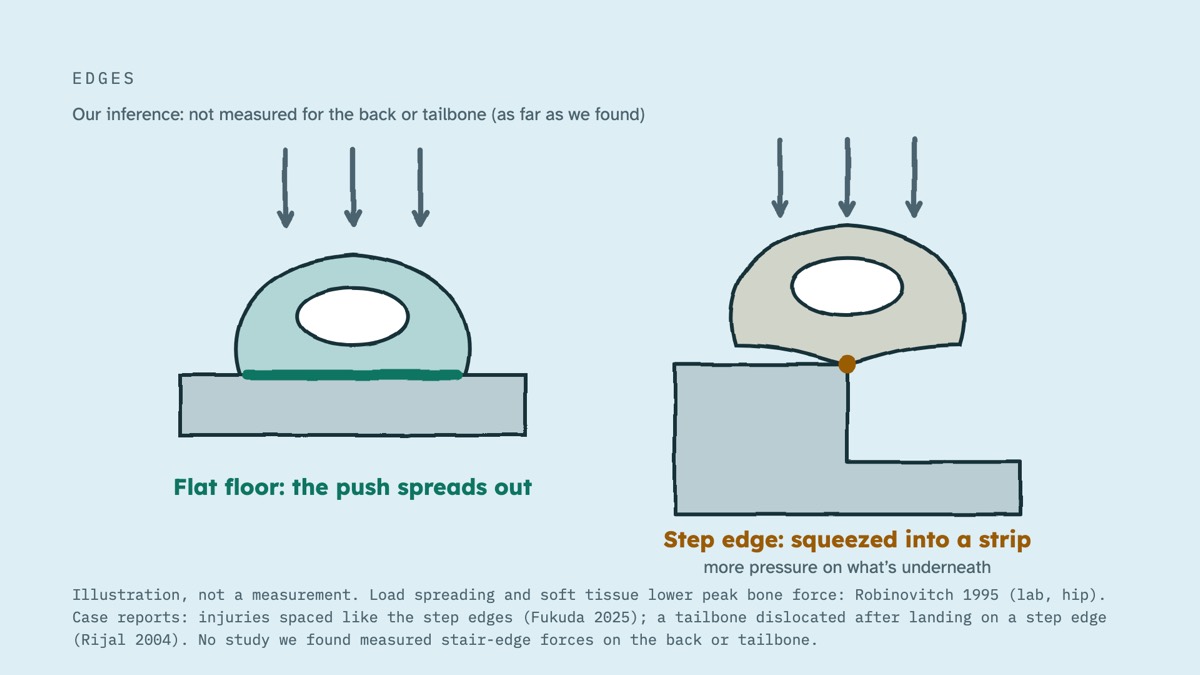
And a step edge isn't flat. Land on a floor, and the push spreads across a wide patch. Land on an edge, and that push is squeezed into a narrow strip, which raises the pressure on what's underneath. As far as we could find, nobody has measured that for the back or tailbone; it's our inference from how impacts work, plus two case reports.
Direction matters too. A trip usually throws you forward, onto the front of your body. A slip at a slow walk tends to drop you backward or sideways, onto your hip or bottom. Stair falls can go either way. If a heel slips off a step going down, the feet may shoot forward, like a backward slip, and lab backward falls onto the buttocks hit with an estimated six to nine times body weight.
Why the back and the tailbone?
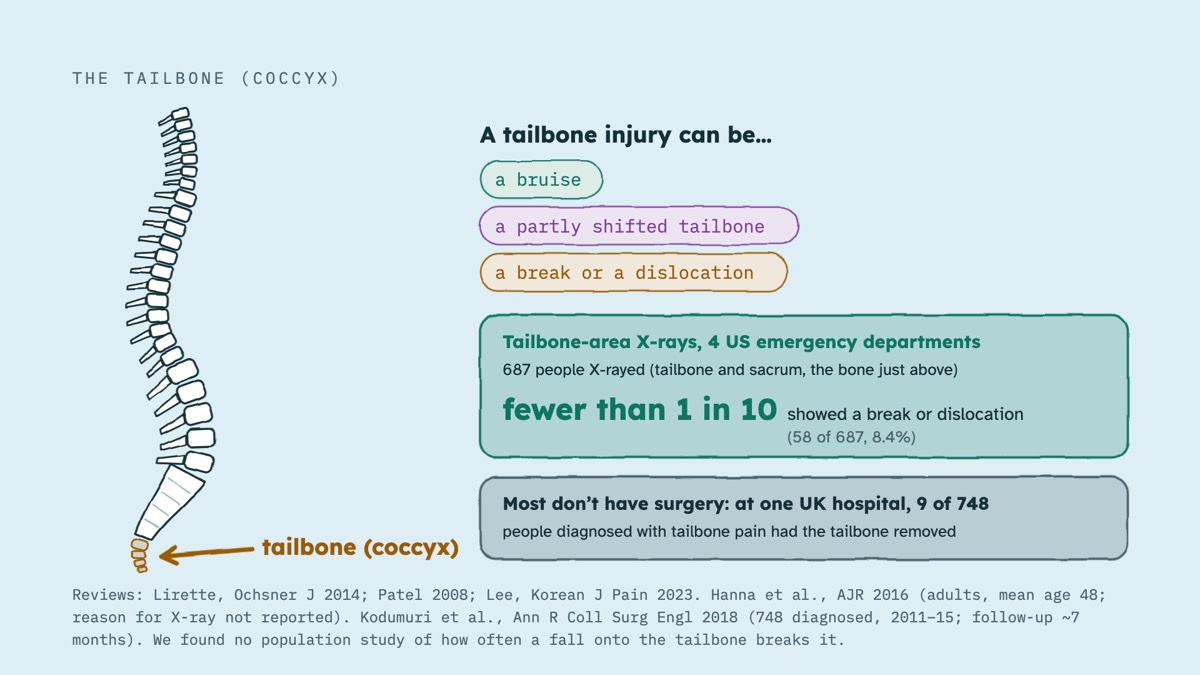
Land sitting, and the tailbone, the small curved bone at the very bottom of the spine, can take part of the hit. Injuries there range from a bruise to a break or a dislocation. In one US study of people given tailbone-area X-rays in emergency departments, fewer than 1 in 10 showed a break or dislocation. And most tailbone pain is managed without surgery.
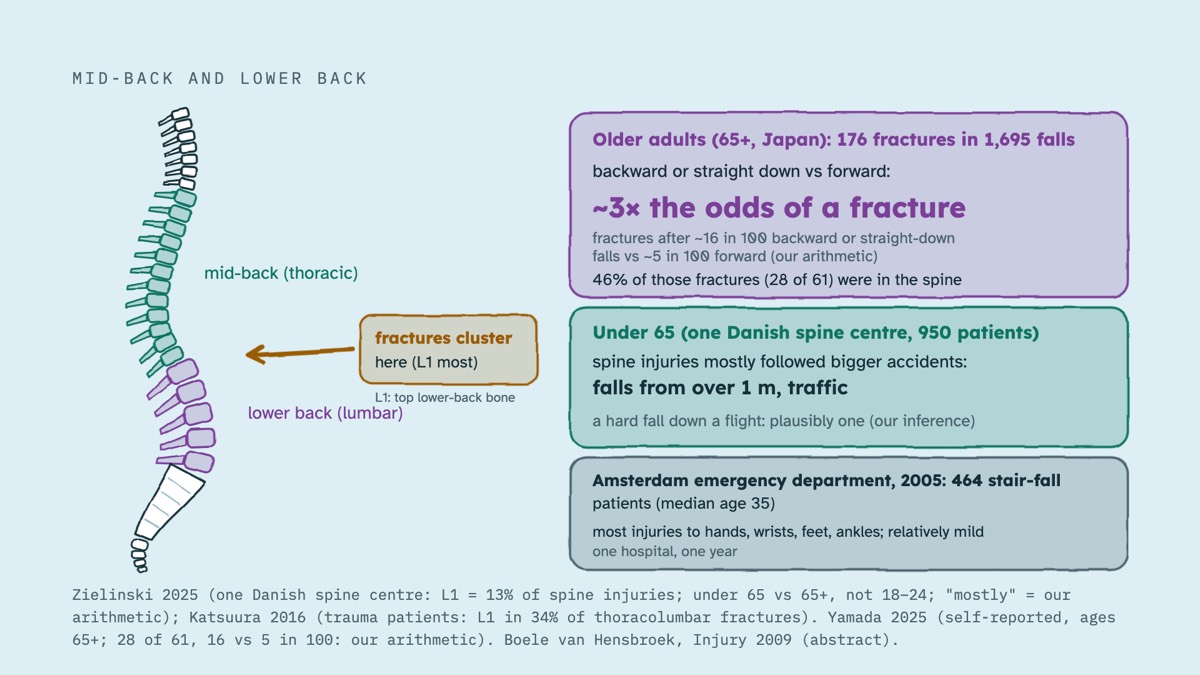
The bigger back bones are a separate question. Spine fractures cluster where the mid-back meets the lower back. In older adults in Japan, falling backward or straight down carried about three times the odds of a fracture compared with falling forward, and almost half of those fractures were in the spine. In people under 65, spine injuries mostly follow bigger accidents, like a fall from over a metre or a crash. A hard fall down a flight of stairs is plausibly one of those. Still, in one Dutch emergency department's year of stair-fall patients, most injuries were to the hands, wrists, feet and ankles, and relatively mild.
How we catch ourselves
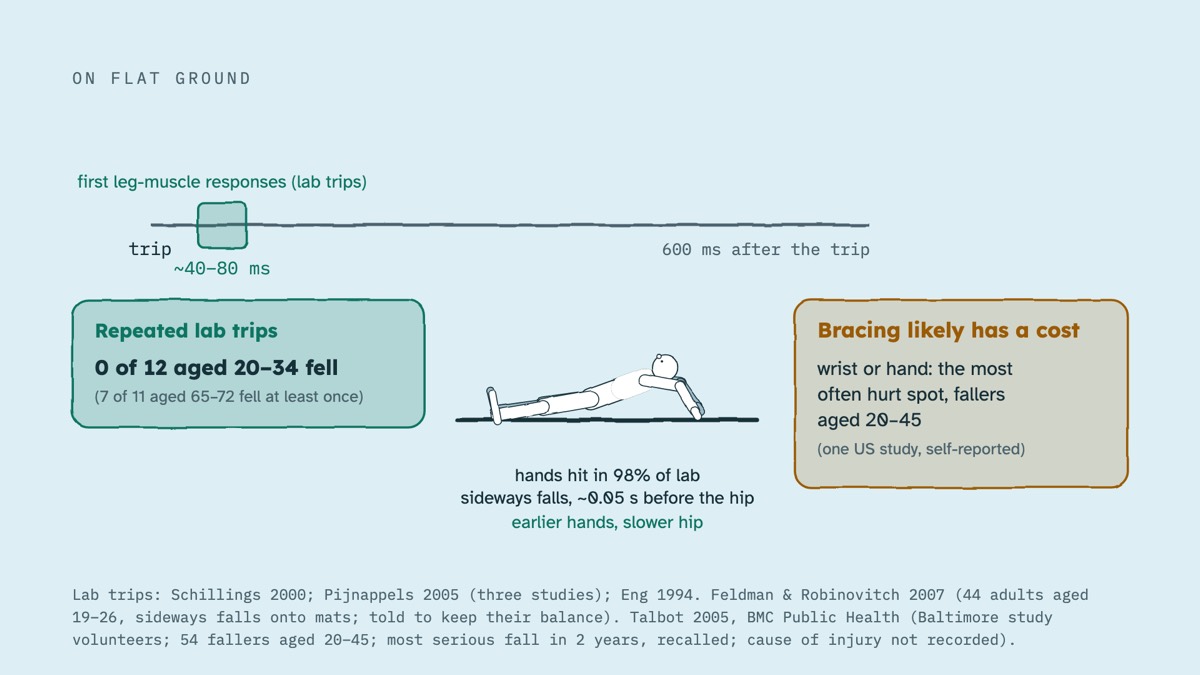
In lab trips, leg muscles start reacting within about 40 to 80 thousandths of a second. In one small lab study, none of 12 young adults fell when tripped again and again. In lab sideways falls, young adults' hands hit in 98 percent of falls, on average just before the hip, and the earlier the hands landed, the slower the hip hit. Bracing likely has a cost: in one US study, adults 20 to 45 who recalled a fall most often hurt a wrist or hand.
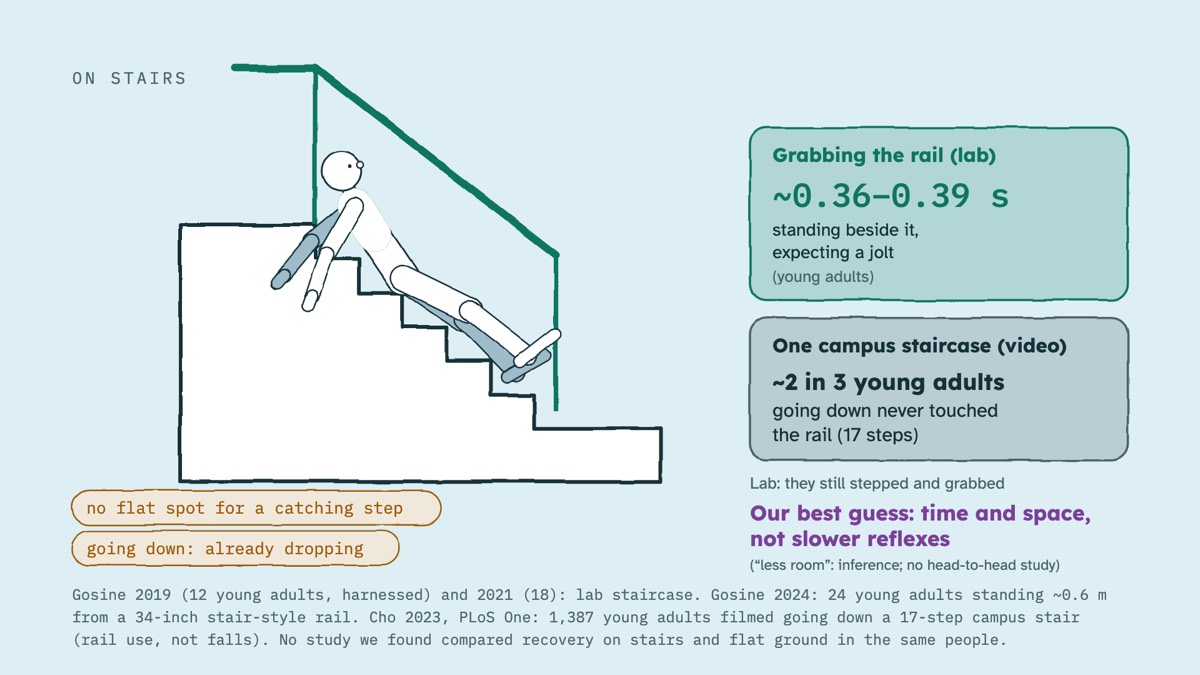
On stairs, people still step and grab for the rail in lab tests, but there's probably less room: no flat spot for a catching step, and going down, the body's already dropping. Even standing beside a handrail and expecting a jolt, young adults in a lab took a little over a third of a second to grab it, and on one campus staircase, about two in three young adults going down never touched the rail. So our best guess: it's time and space, not slower reflexes.
Do stair falls really break more bones?
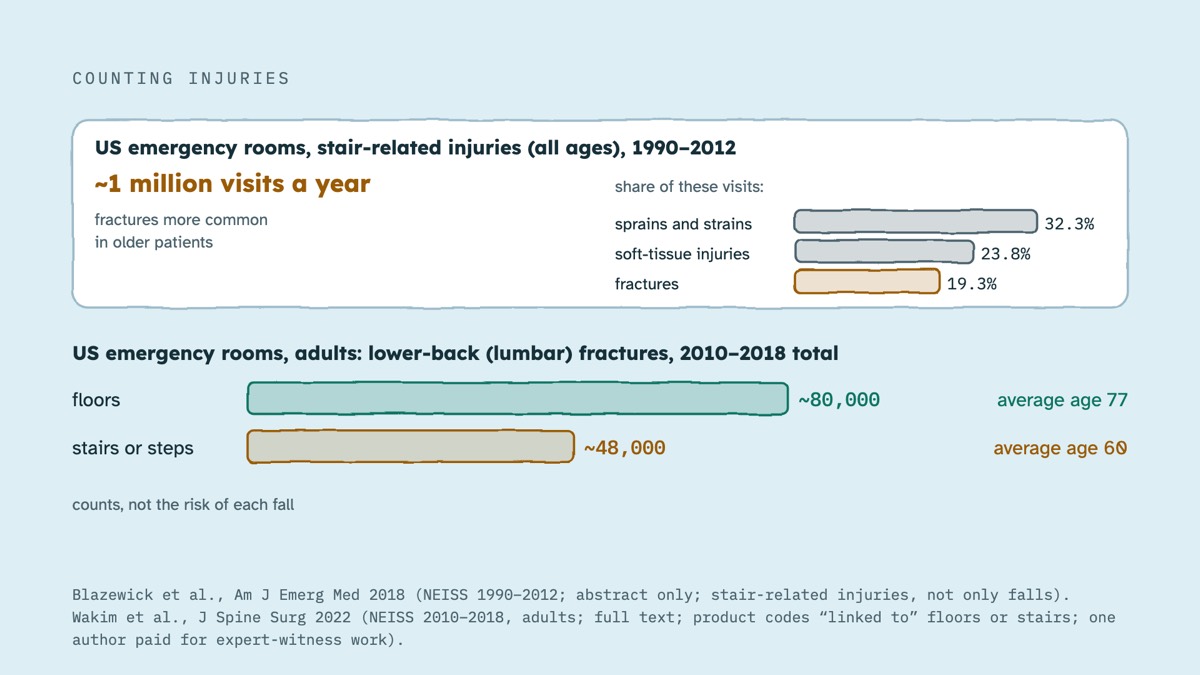
Counts first. Between 1990 and 2012, US emergency rooms treated about a million stair injuries a year; about one in five was a fracture, and sprains and other soft-tissue injuries were more common. For lower-back fractures, US emergency rooms logged more linked to floors than to stairs, but the floor patients averaged 77 years old.
And in a US survey of adults 18 to 44, stairs played a part in only about one in five women's fall injuries that needed medical care, and one in thirteen men's.
Fall for fall, though, stairs look riskier, at least in older people. In people 72 and older, a first fall on stairs was about twice as likely to cause a serious injury as other falls. We couldn't find any study that has measured that in people your age. And in the student study, about half fell at least once over 16 weeks, but only one student in ten reported an injury from a fall.
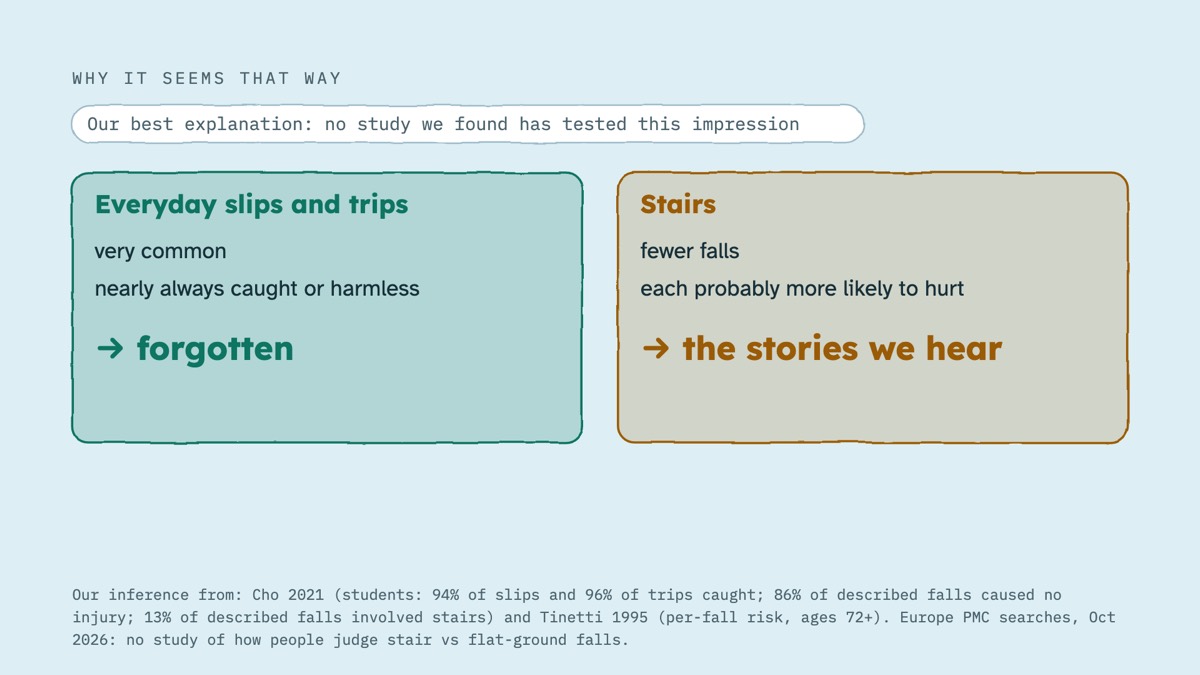
So why does it seem the other way around? Our best guess: everyday slips and trips happen all the time and are nearly always caught or harmless, so they're forgotten. Fewer falls happen on stairs, but each one is probably more likely to hurt, and the bad ones are the stories we hear.
In one Norwegian hospital's records of adults admitted with a brain injury, mostly older people, stair falls more often came with a moderate or severe injury than falls from standing: 53 versus 31 percent. Alcohol may explain part of that gap: 58 percent of stair-fall patients were under the influence, versus 22 percent after falls from standing.
And hard flat ground isn't harmless. In head-drop tests on real floors, vinyl tile laid over concrete scored no better than bare concrete, and in that Oslo hospital, falls from standing height were about half of all fall-related brain injuries. Still, in the student study, about six in seven of all the falls students described, stairs included, caused no injury at all.
Before you go. Practical steps, mostly from lab and observational studies: use the handrail, keep stairs lit and clear, look at the steps rather than your phone, keep a hand free for the rail, and take extra care after drinking. After a fall, get emergency care for danger signs like a worsening headache, repeated vomiting, confusion, new numbness or weakness, or trouble controlling your bladder or bowels. If someone might have hurt their neck, gently support their head so it moves as little as possible until trained help arrives. Reviews say tailbone pain usually settles within a few months, but see a clinician if it's severe or isn't easing.
Sources
7 sources cited in the video, in the order they come up.
Key sources
- Tinetti 1995, serious injury in falls among people 72+
- Timsina 2017, circumstances of fall injuries (US survey)
- Cho 2021, falls in US college students
- Tverdal 2025, brain injury after stair falls vs falls from standing
- Hanna 2016, tailbone-area X-rays in emergency departments
- CDC, head-injury danger signs


