
High Blood Pressure, Explained Like You're Five
Inside this episode
The video’s narration, chapter by chapter, with stills from the video and every source at the end.
The short version
: blood pressure is the push of blood on your artery walls. Too much for too long wears things out, and bringing it down helps protect your heart and your brain.
The pump and the hoses
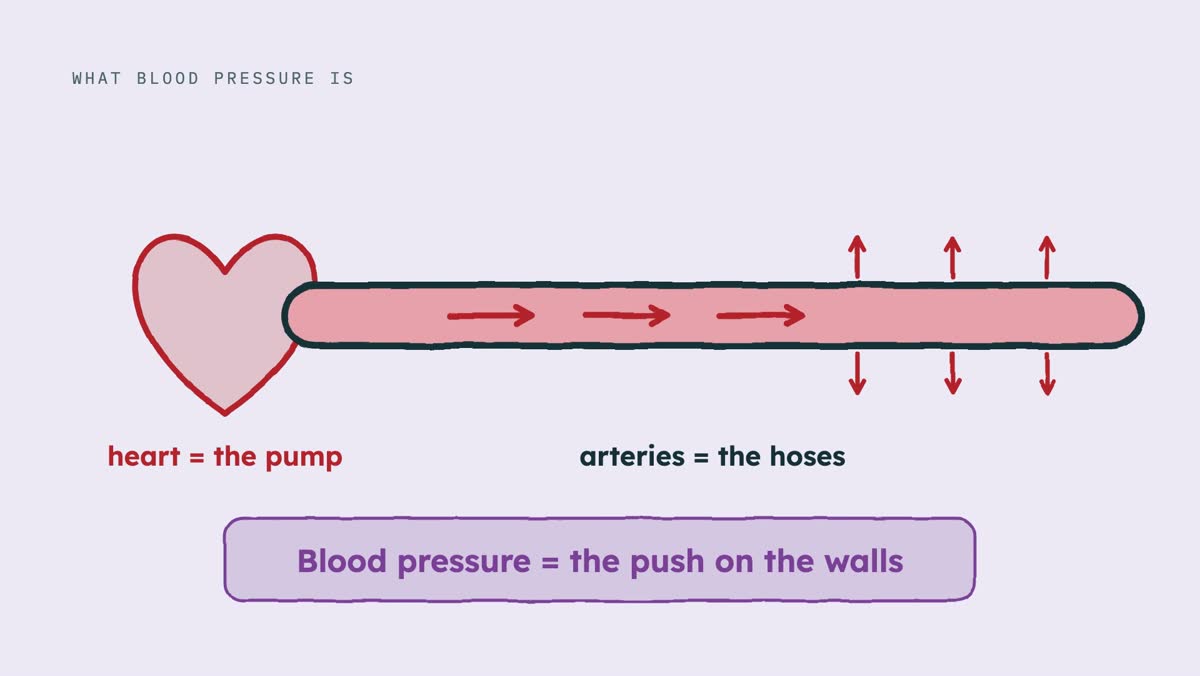
Picture a pump pushing water through a garden hose. Every squeeze presses water against the hose walls. Your heart is the pump, your arteries are the hoses, and blood pressure is how hard the blood pushes on those walls.
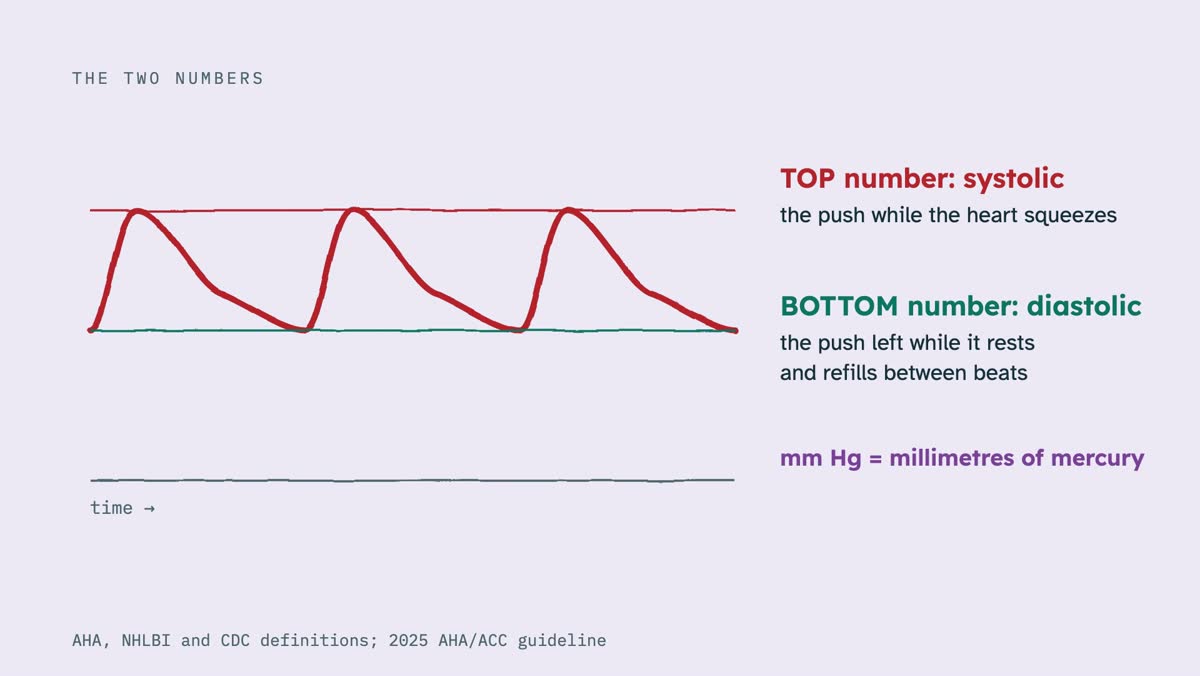
That's why there are two numbers. The top one, systolic, is the push while the heart squeezes. The bottom one, diastolic, is the push that's left while the heart rests and refills between beats. Both are measured in millimetres of mercury.
What the numbers mean
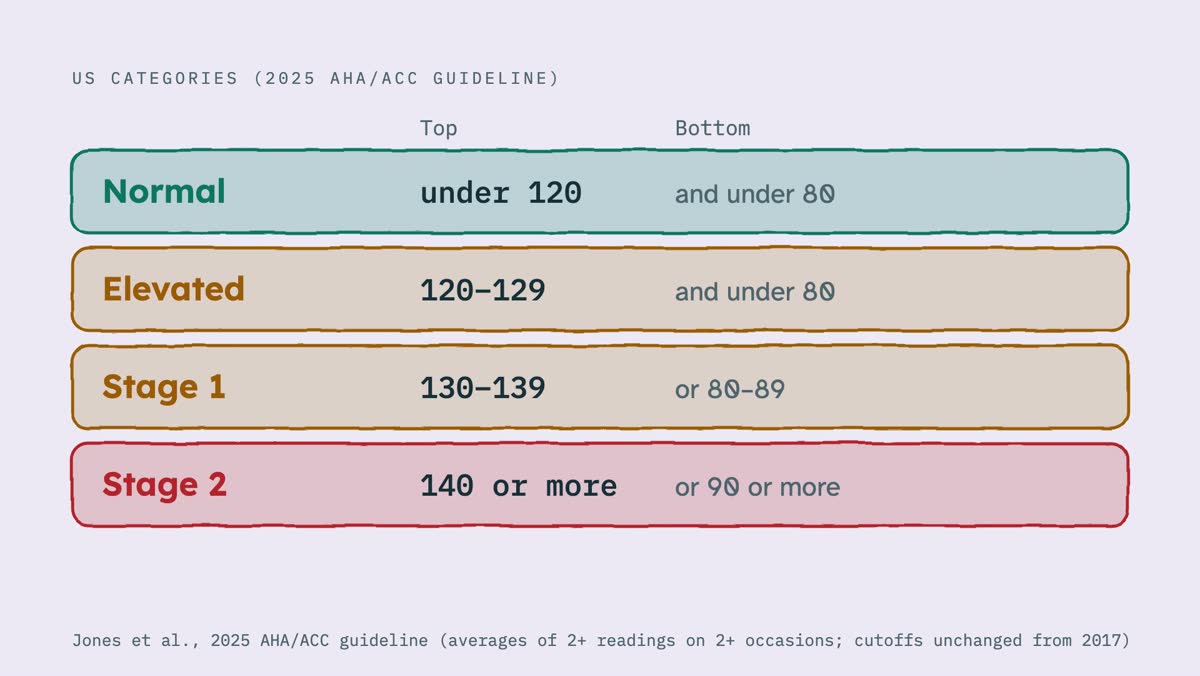
US guidelines sort average readings into groups. Under 120 over 80 is normal. 120 to 129 on top is called elevated. 130 to 139, or 80 to 89 on the bottom, is stage one. And 140 or 90 and up is stage two.
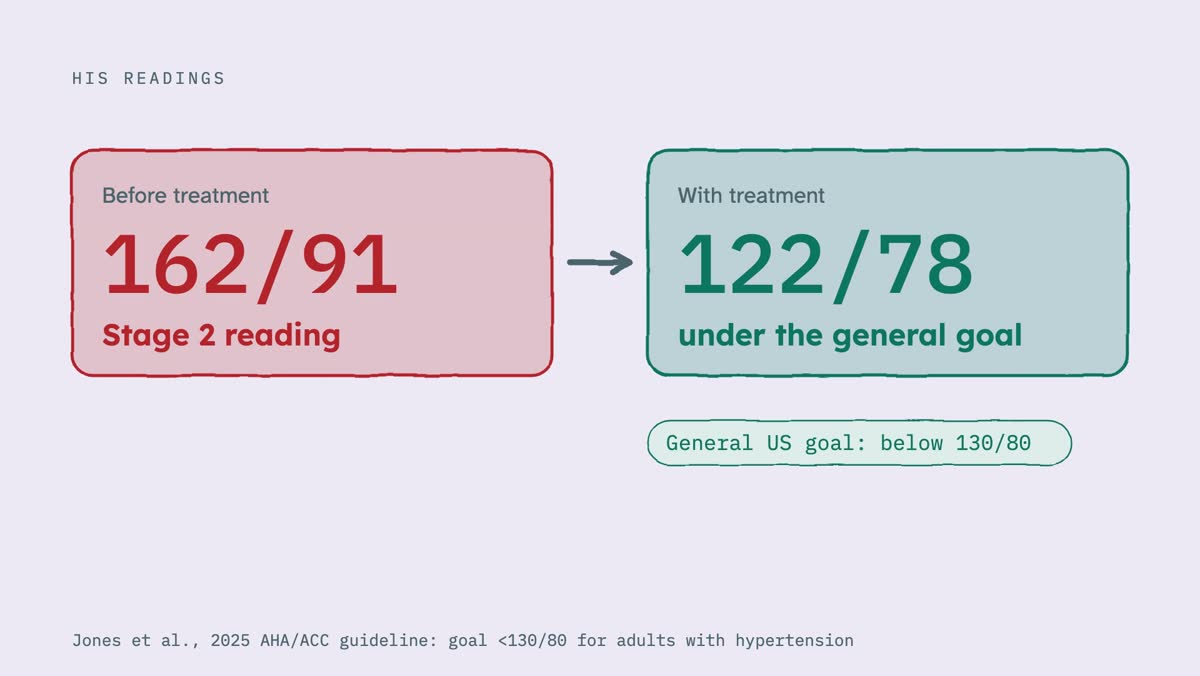
So 162 over 91 is a stage two reading. On treatment, 122 over 78 is under the general US goal: below 130 over 80.
Why it creeps up
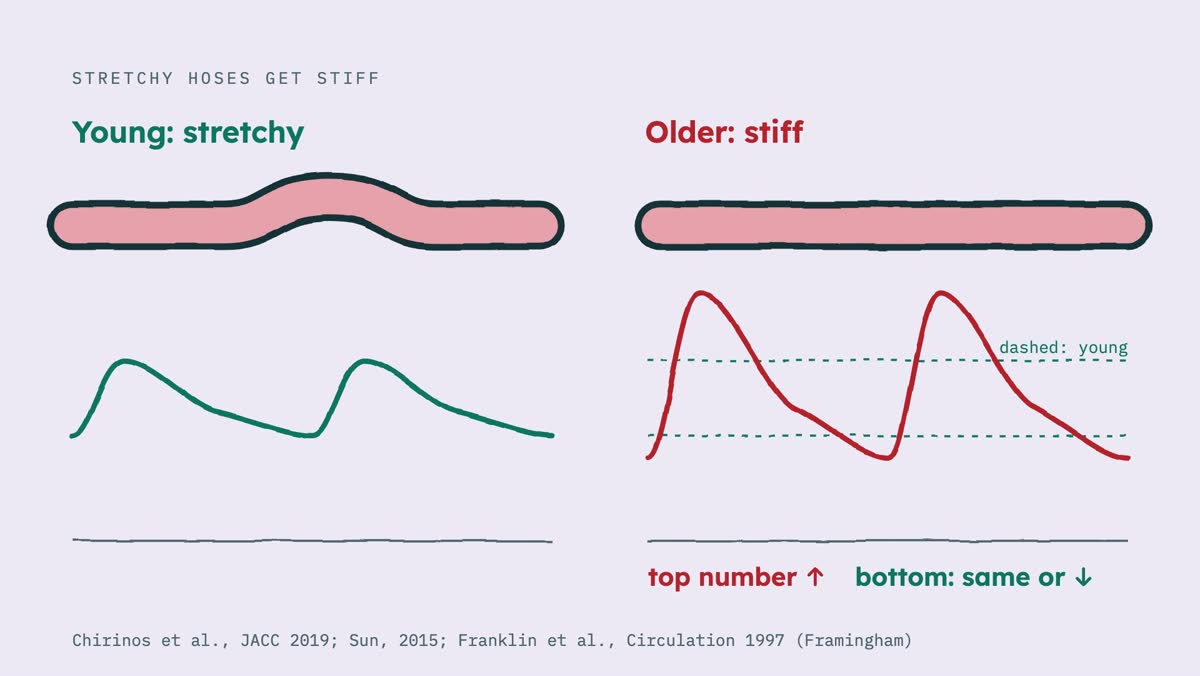
Young arteries are stretchy: with every heartbeat they bulge and spring back, softening each push. Over the years, the stretchy fibres wear out and stiffer material builds up. A stiff hose can't soften the squeeze, so the top number tends to climb, while the bottom number stays put or even drops.
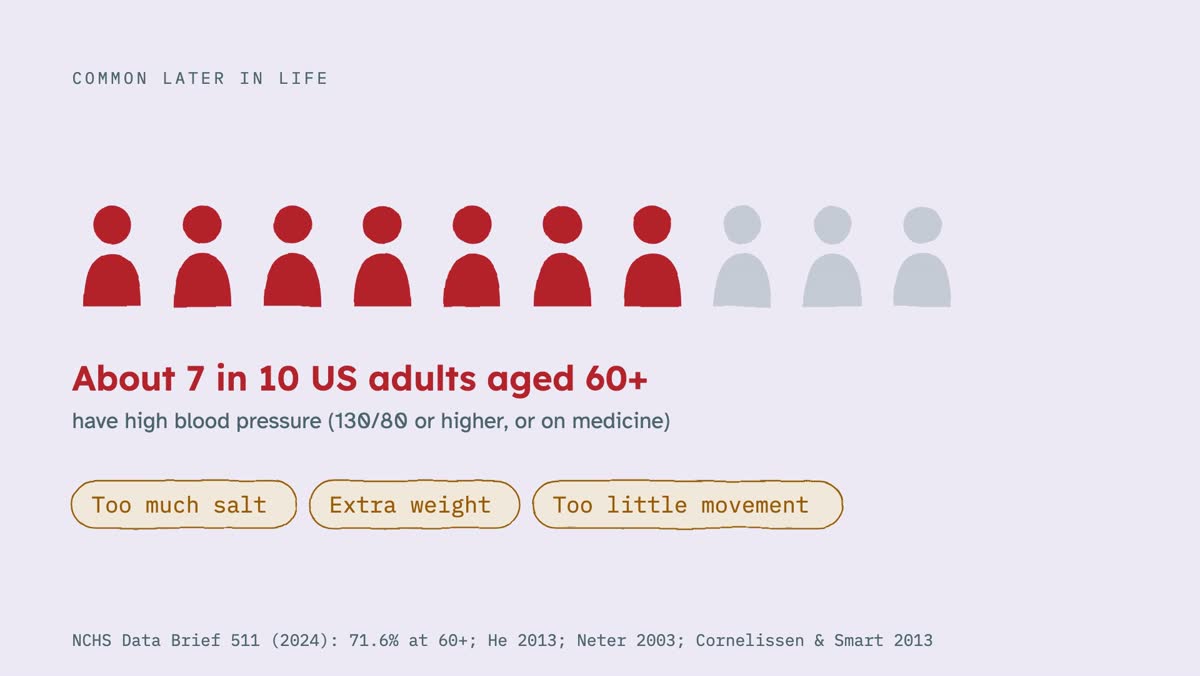
That's one big reason it's so common later in life: about 7 in 10 US adults aged 60 and over have it. Too much salt, extra weight and too little movement can push it higher.
Why it matters
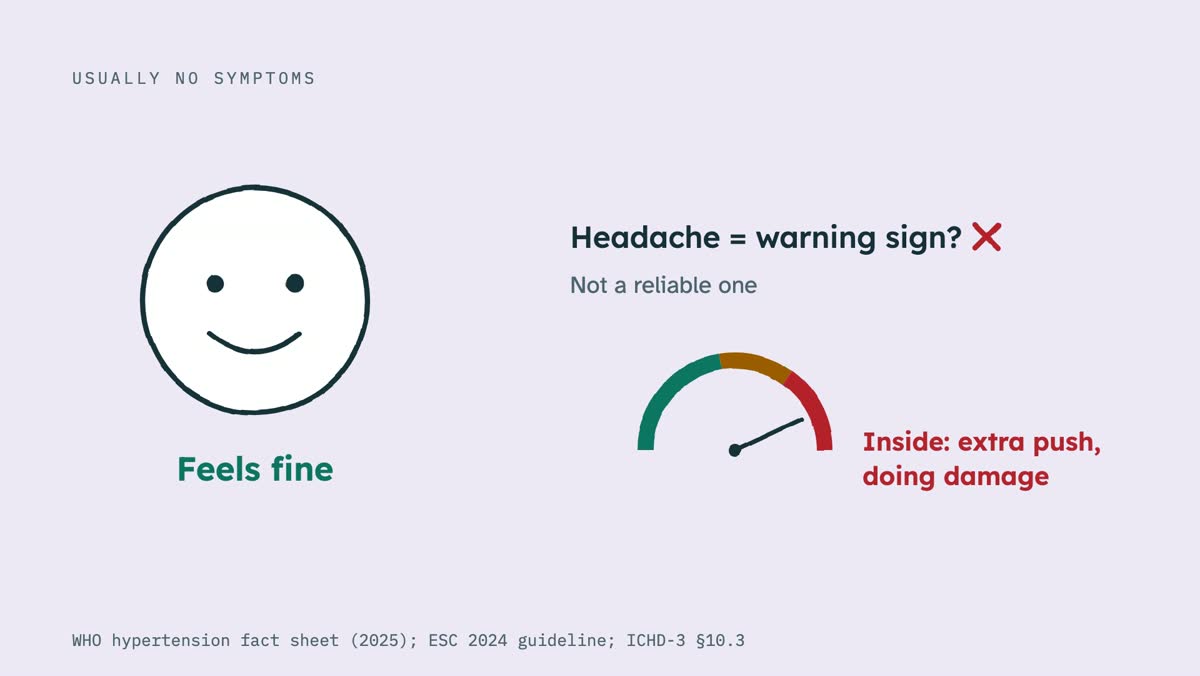
Most people with high blood pressure feel fine, and headaches aren't a reliable warning sign. But inside, the extra push can still be doing damage.
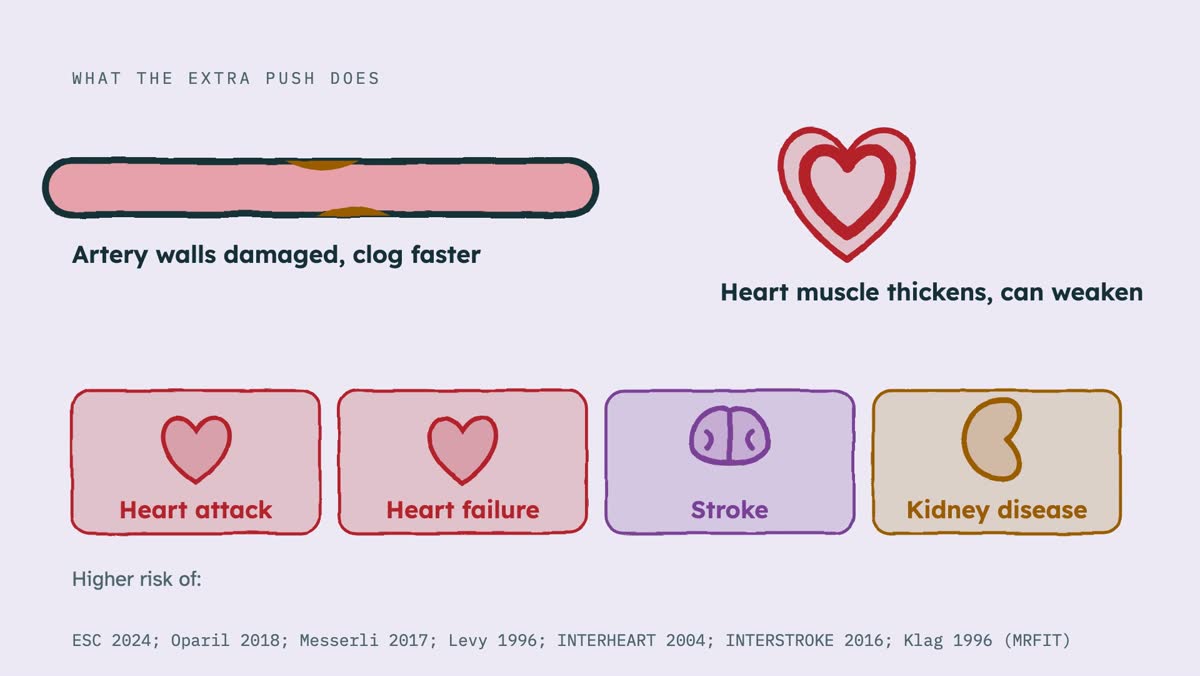
A hose under too much pressure wears out. Artery walls get damaged and clog faster. The heart has to push harder, so its muscle thickens and can weaken. That raises the risk of heart attacks, heart failure, strokes and kidney disease.
In a famous analysis of about a million adults, for people aged 40 to 69, every 20 points higher on the top number came with about twice the risk of dying from a stroke or heart disease. At older ages the jump is smaller, but because risk starts higher, the extra danger is bigger.
Bringing it down
Some medicines help the kidneys get rid of extra salt and water. Some relax and widen the hoses. Some slow and soften the pump. Less salt, more movement and losing extra weight help too.
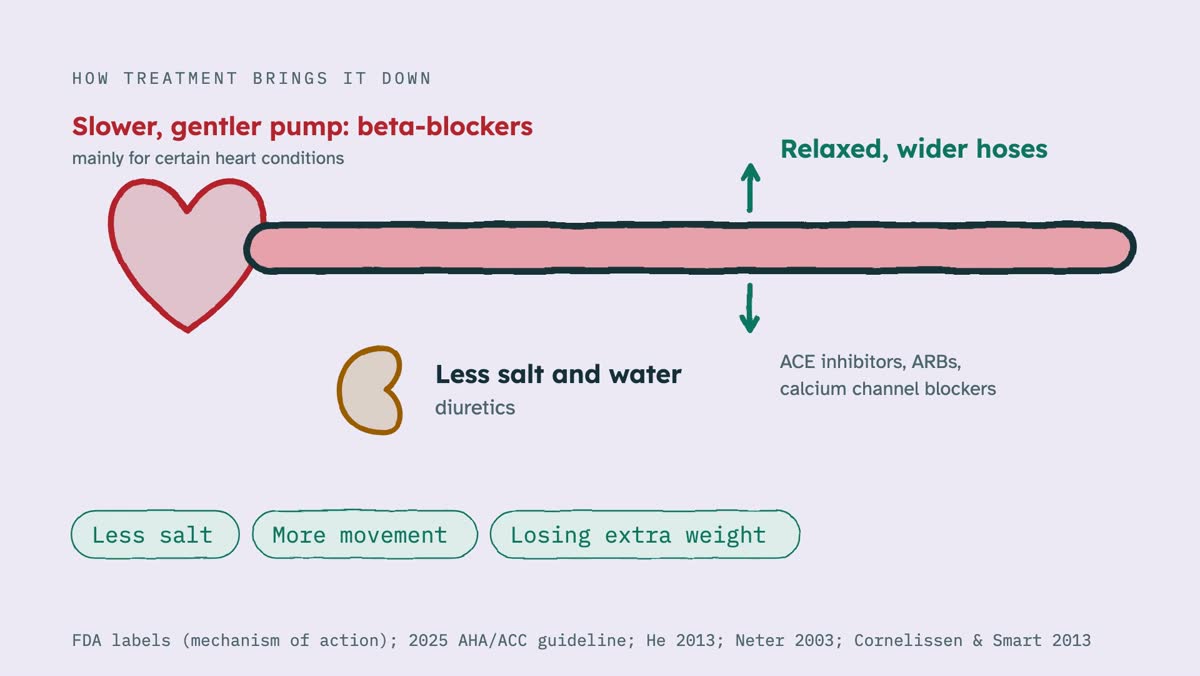
And bringing it down really does help. In a big analysis of trials, every 10 points lower on the top number meant about 20 percent fewer major heart and stroke events, and about a quarter fewer strokes.
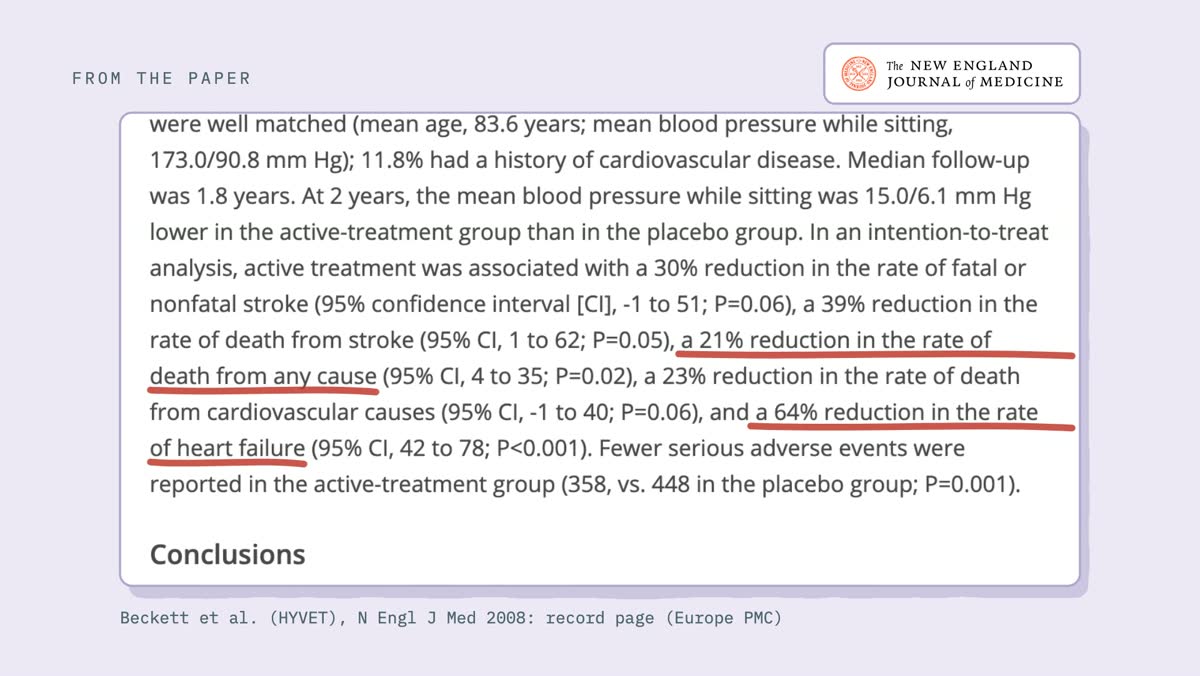
That holds in older people too. In a trial of people aged 80 and over with high readings, treatment cut deaths by about a fifth and heart failure by nearly two thirds.
Treatment controls high blood pressure; it doesn't cure it. When medicines are stopped, the numbers usually climb back up, so any change is a decision to make with a doctor.
So, like you're five: the heart is a pump, the arteries are hoses, and blood pressure is the push. Too much push for too long wears things out, and bringing it down helps keep them working.
Sources
26 sources cited in the video, in the order they come up.
What blood pressure is and what the numbers mean
- Jones et al. 2025, AHA/ACC high blood pressure guideline (Hypertension)
- Same guideline, JACC version
- NHLBI, high blood pressure
- CDC, about high blood pressure
Why it creeps up
- Chirinos et al. 2019, large-artery stiffness
- Sun 2015, aging, arterial stiffness and hypertension
- Franklin et al. 1997, age-related blood pressure patterns (Framingham)
- NCHS Data Brief 511 (2024)
- He et al. 2013, salt reduction
- Neter et al. 2003, weight loss
- Cornelissen & Smart 2013, exercise
Why it matters
- WHO hypertension fact sheet
- McEvoy et al. 2024, ESC hypertension guideline
- ICHD-3, headache attributed to hypertension (10.3)
- Oparil et al. 2018, hypertension review
- Messerli et al. 2017, hypertension to heart failure
- Levy et al. 1996, Framingham heart failure
- Yusuf et al. 2004, INTERHEART
- O'Donnell et al. 2016, INTERSTROKE
- Klag et al. 1996, blood pressure and kidney failure (MRFIT)
- Lewington et al. 2002, Prospective Studies Collaboration


